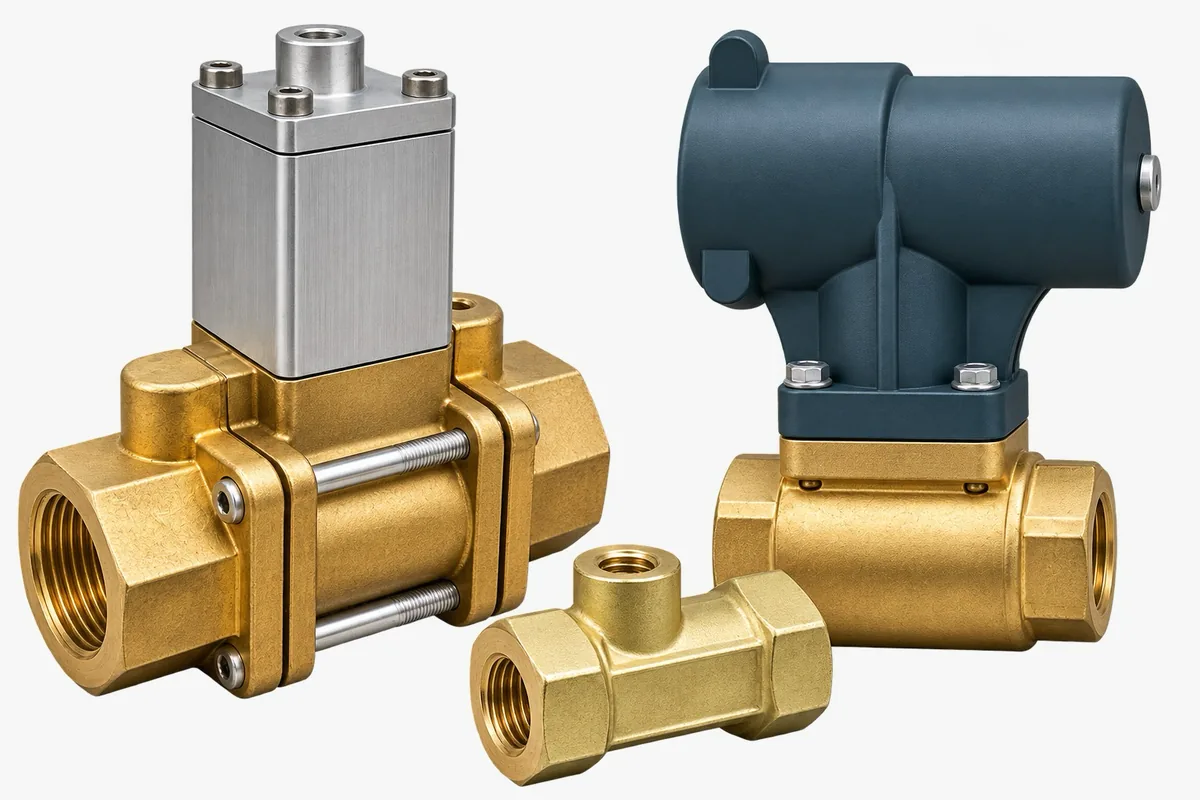
Valves for industrial media
For liquids, gases, steam and viscous media — NC and NO versions.
Unlike classic pneumatics, where the working medium is only compressed air, valves for industrial media are designed to work with different liquids, gases, steam and viscous media. They are used in the process industry, power engineering, water supply and drainage, chemical and food industry, and refinery systems. By method of control they are divided into valves operated by air, solenoid or magnetic field, and mechanically operated valves. By their basic state, that is the state they are in when not activated, they are divided into NC (normally closed) and NO (normally open). When selecting a valve, attention must be paid to the state the valve is in most of the time, or the state it should be in if the power or air supply fails. Housing versions in brass and stainless steel are available, along with NBR, EPDM and FKM (Viton) sealing materials, subject to valve type availability.
NC valves – normally closed: when the valve is not activated, the flow of media is closed. In the solenoid version this means no current flows through the coil, so a spring or another mechanism holds the control element in the closed position.
NO valves – normally open: when the valve is not activated, the flow of media is allowed. In the solenoid version, applying voltage to the coil closes the valve, stopping the flow. After the supply is cut, the valve returns to the open position.
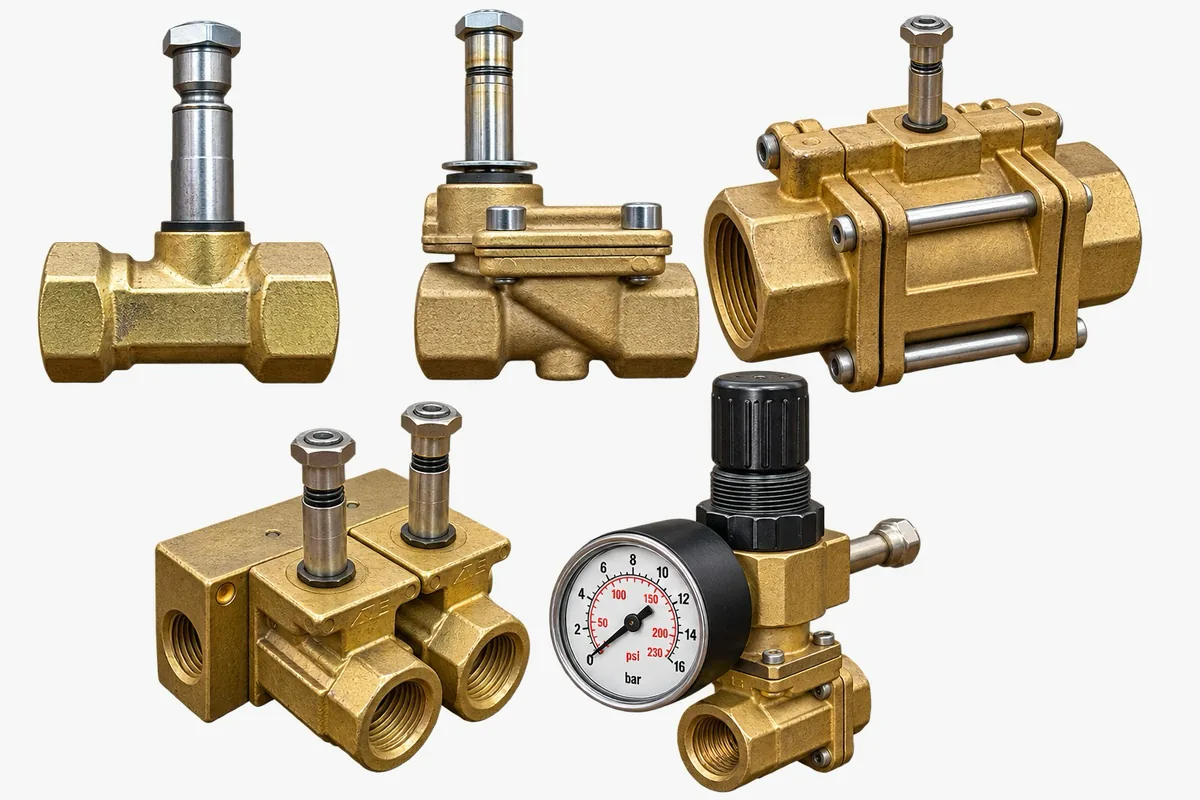
Pilot-operated valves
DN 10–50The solenoid does not open the valve directly but controls a small pilot orifice. Activating or deactivating the coil changes the position of the control mechanism, which then uses system pressure to open or close the valve (NC or NO). Media or system pressure helps press the membrane onto the seat, so for correct operation the system must always be under pressure, that is, a minimum differential pressure of 0.2–0.5 bar must exist depending on the version. This design allows control of relatively high flows in relation to valve size and solenoid strength, with lower current consumption and less risk of overheating. Valves with connections from 3/8″ to 2″, that is nominal sizes DN10–50, are available, as well as special versions with several valves connected.
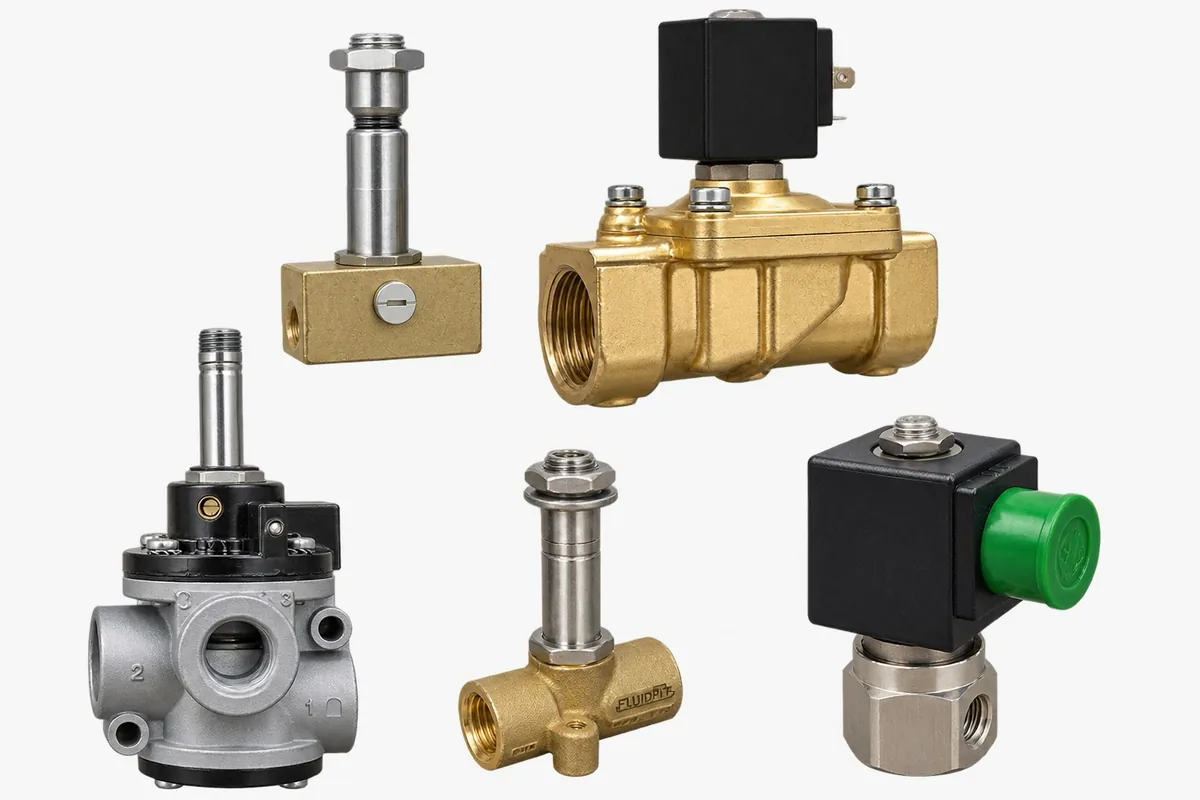
Direct acting valves
DN 1,2–50In direct acting valves the solenoid coil directly drives a piston that opens or closes the valve. The advantage of such a valve is that it works when there is no differential pressure or when system pressure is 0 bar. These valves are usually used for smaller flows, since larger diameters and pressures require a stronger coil than in pilot-operated valves. The standard range includes valves with connections from M5 (5 mm) to 2″, that is nominal sizes DN1,2–50.
Pneumatically operated valves
NC · NOPneumatically operated valves use air pressure to generate the mechanical force needed to open or close the valve, depending on the version (NC and NO). They come as direct acting, pilot-operated or ball valve designs.