Pneumatic valves
3/2, 5/2 and 5/3 valves — solenoid, pneumatic and mechanically operated.
Pneumatic valves, or directional control valves, direct, allow or stop the flow of compressed air to actuators such as pneumatic cylinders. They control pneumatic elements and the work cycles of pneumatic systems. The most common versions are 3/2, 5/2 and 5/3, where the first number is the number of ports and the second the number of positions. 3/2 valves are often used to control single-acting cylinders, while 5/2 valves are intended primarily for double-acting cylinders. 5/3 valves have three control positions and allow additional modes of control, for example blocking or relieving the cylinder ports depending on their design.
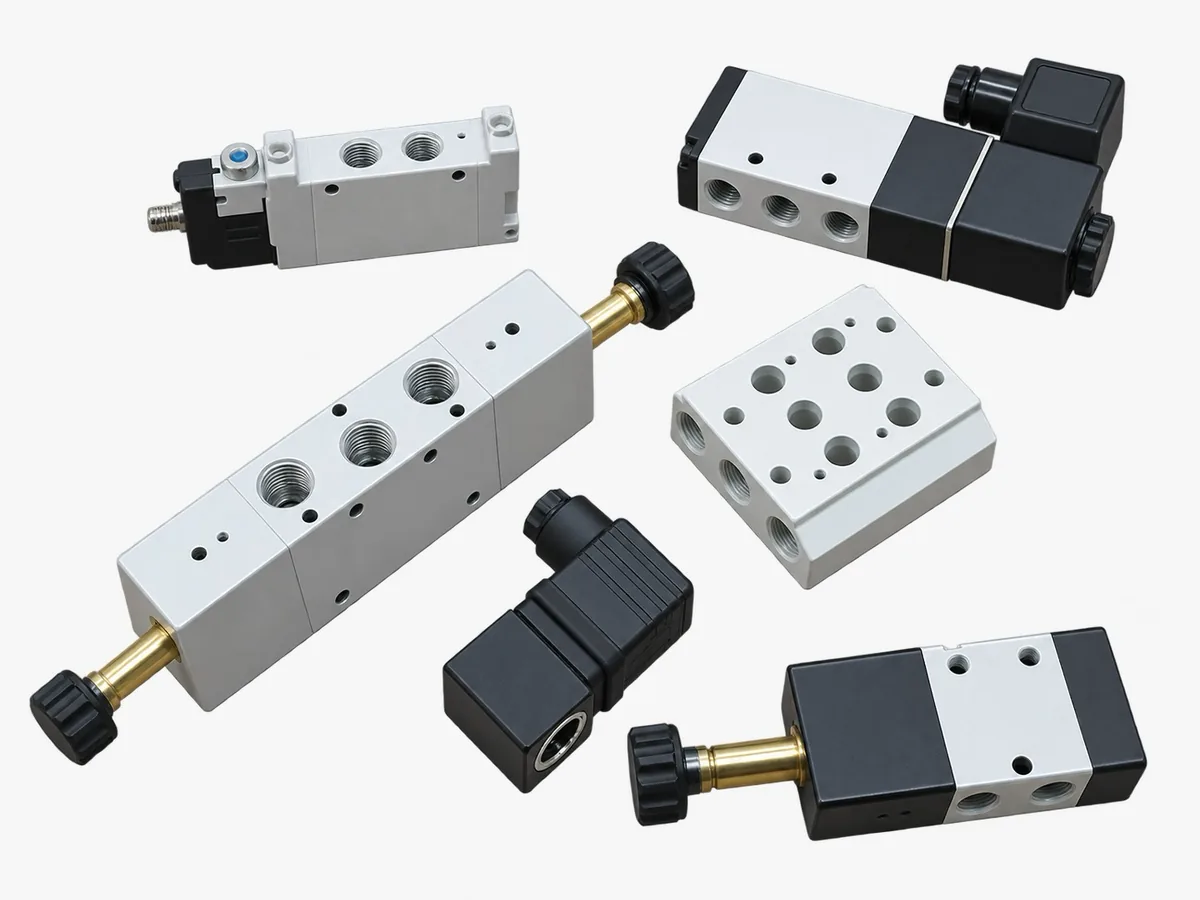
Solenoid valves
Actuated by an electrical signal. When voltage is applied to the coil, a magnetic field moves the piston or moving element inside the valve. This changes the position of the internal passages and allows air to flow to a given outlet, while another passage can be closed or relieved at the same time. After the supply is switched off, the valve returns to its initial position or stays in the last one, depending on its construction. We offer 3/2, 5/2 and 5/3 valve types.
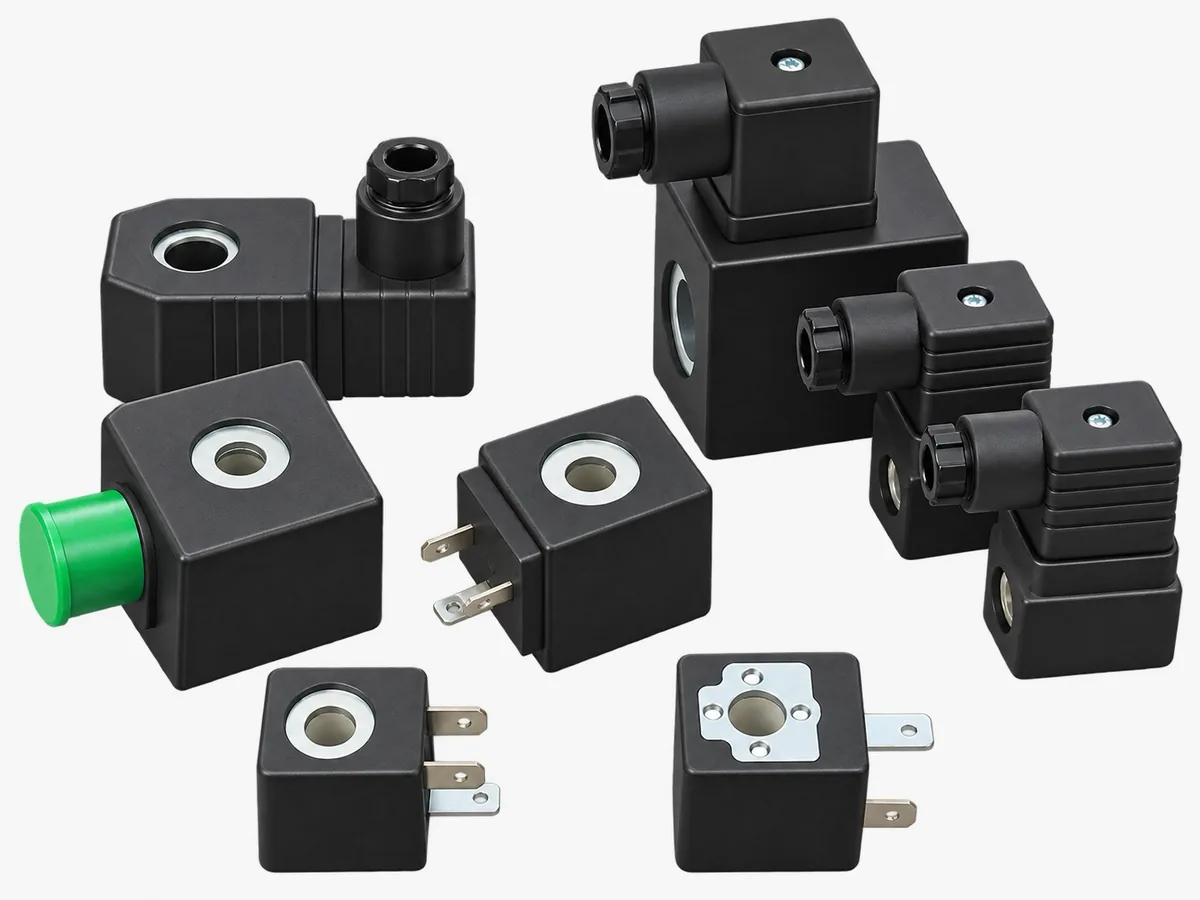
Solenoids, electromagnets and coils
Solenoids, or electromagnets, are the key parts of electrically operated valves — they convert electrical energy into mechanical motion that controls the flow of compressed air. The coil is the electrical part, while the moving iron element transfers the magnetic force to the valve mechanism. In practice „špula“ often means the coil, but in pneumatics it can also mean the moving spool that redirects air inside the valve body, so when ordering spare parts check which part the name refers to. They are not universal: they must match the electromagnet design, the valve type and the intended electrical control. The most important characteristics are rated voltage (12 V DC, 24 V DC, 24 V AC, 230 V AC, etc.), supply type (DC or AC), electrical power in watts, the electrical connector and contact layout, housing dimensions and armature bore, and the protection rating (IP code).
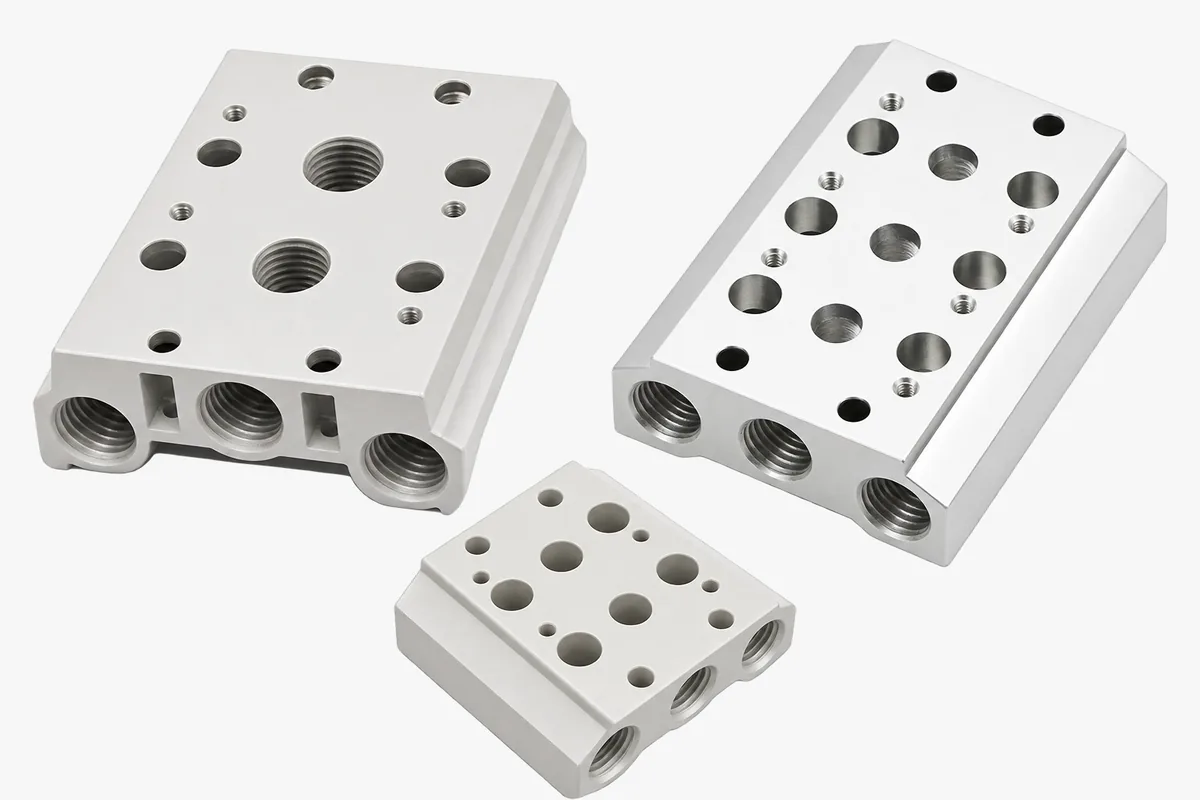
Manifold plates for solenoid valves
Solenoid valves are often mounted on plates. Manifold plates are elements of pneumatic systems used to mount, connect and organize several solenoid valves on a common base. When replacing an individual valve installed on a plate, it is important to check the valve's dimensions and design — because of limited mounting space and specific port positions, valves from different manufacturers are often not compatible.
Pneumatically operated valves
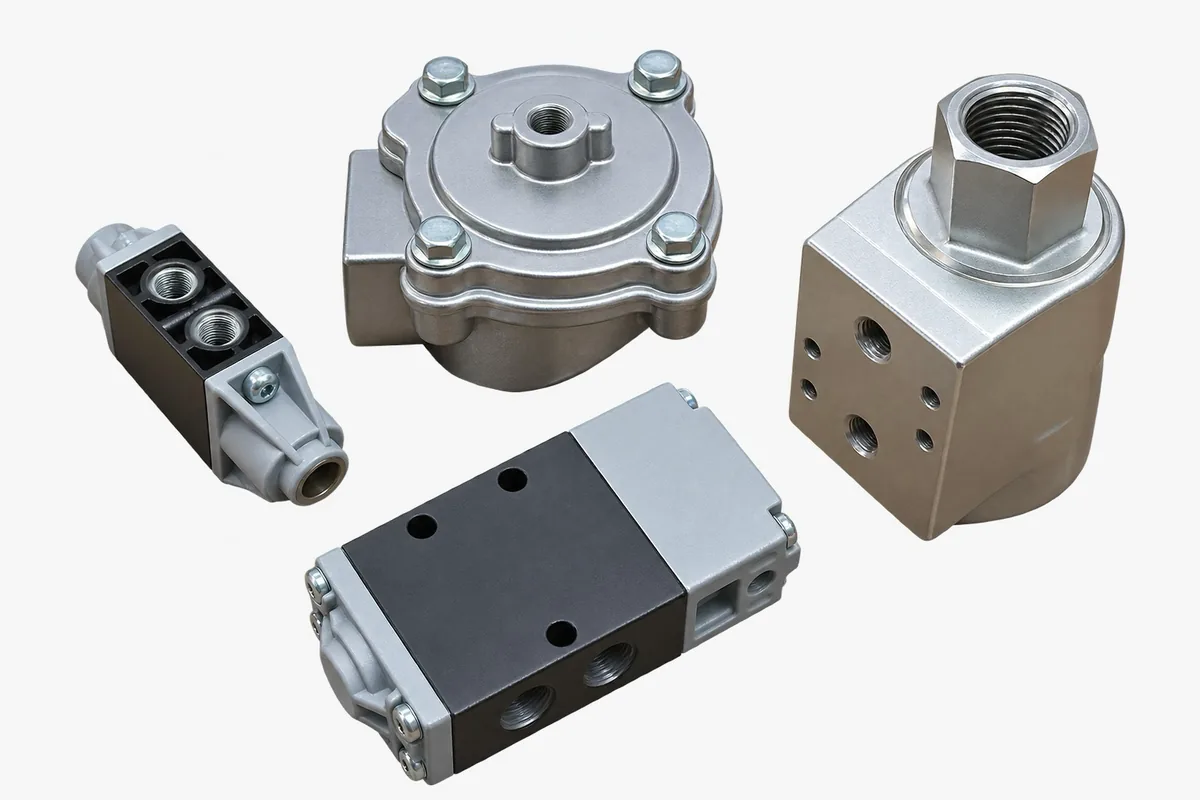
Pneumatically operated valves have the same purpose as solenoid valves, but instead of an electrical signal they are actuated pneumatically — by air pressure from another part of the system. The most common versions are 3/2, 5/2 and 5/3 configurations.
Mechanically operated valves
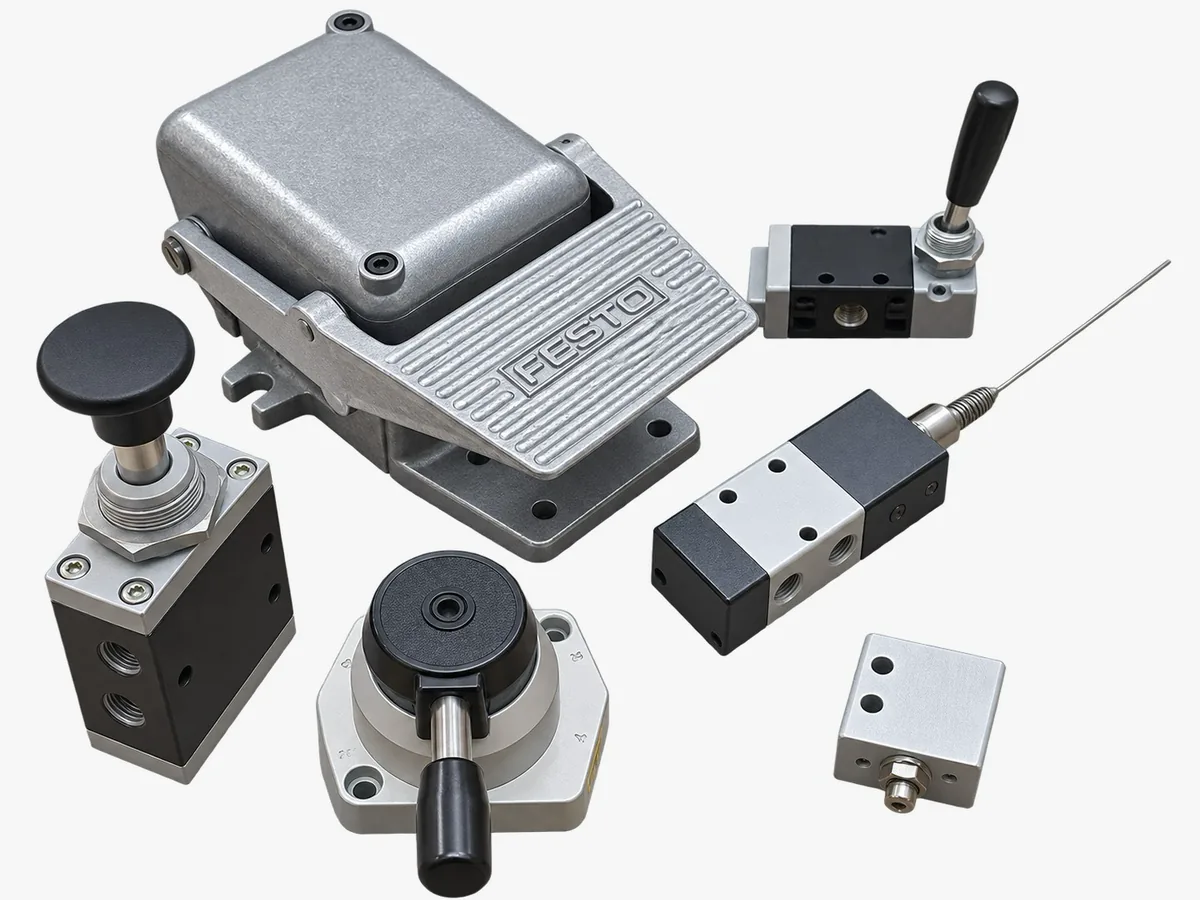
Mechanically operated pneumatic valves are used to direct and control the flow of compressed air by mechanical force. The working principle is based on moving an internal piston or spool that changes the interconnection of the inlet, outlet and exhaust passages. The most common versions include manual valves with a push button, lever or handle, foot pedals, roller-lever valves and plunger-operated valves.